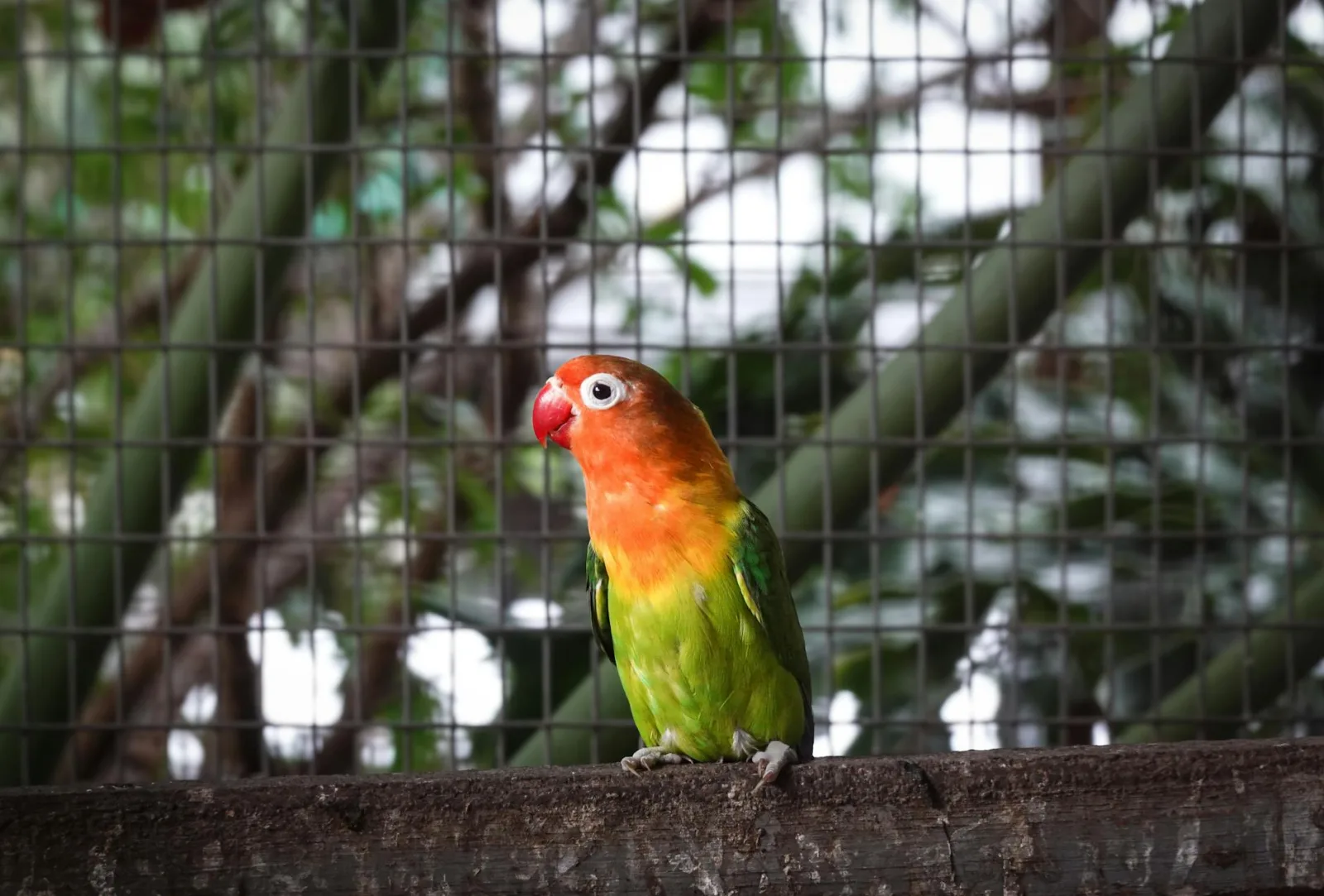
Lovebirds pack an enormous personality into a tiny body. Curious, energetic and sometimes feisty, they can be wonderfully entertaining companions — but they are not the gentle, cuddly birds their name suggests, and they need proper care and handling.
Housing an active bird
Lovebirds are busy and need room to move, so provide as large a cage as you can with plenty of toys, perches and foraging opportunities. They are strong chewers, so offer safe wood and destructible toys to keep beaks and minds occupied, and give daily out-of-cage time in a secure room.
Diet and care
- Feed a balanced pelleted diet with fresh vegetables and some fruit; limit seed.
- Provide a cuttlebone for calcium and clean water daily.
- Keep the environment free of fumes, smoke and non-stick cookware.
The single-versus-pair question
Lovebirds are social, and a solitary bird needs a great deal of daily interaction to stay happy. Many do best in pairs — though a bonded pair may be less interested in humans. They can be territorial and nippy, so handle them consistently and gently from the start. With attention and respect for their bold nature, lovebirds are engaging, long-lived companions.