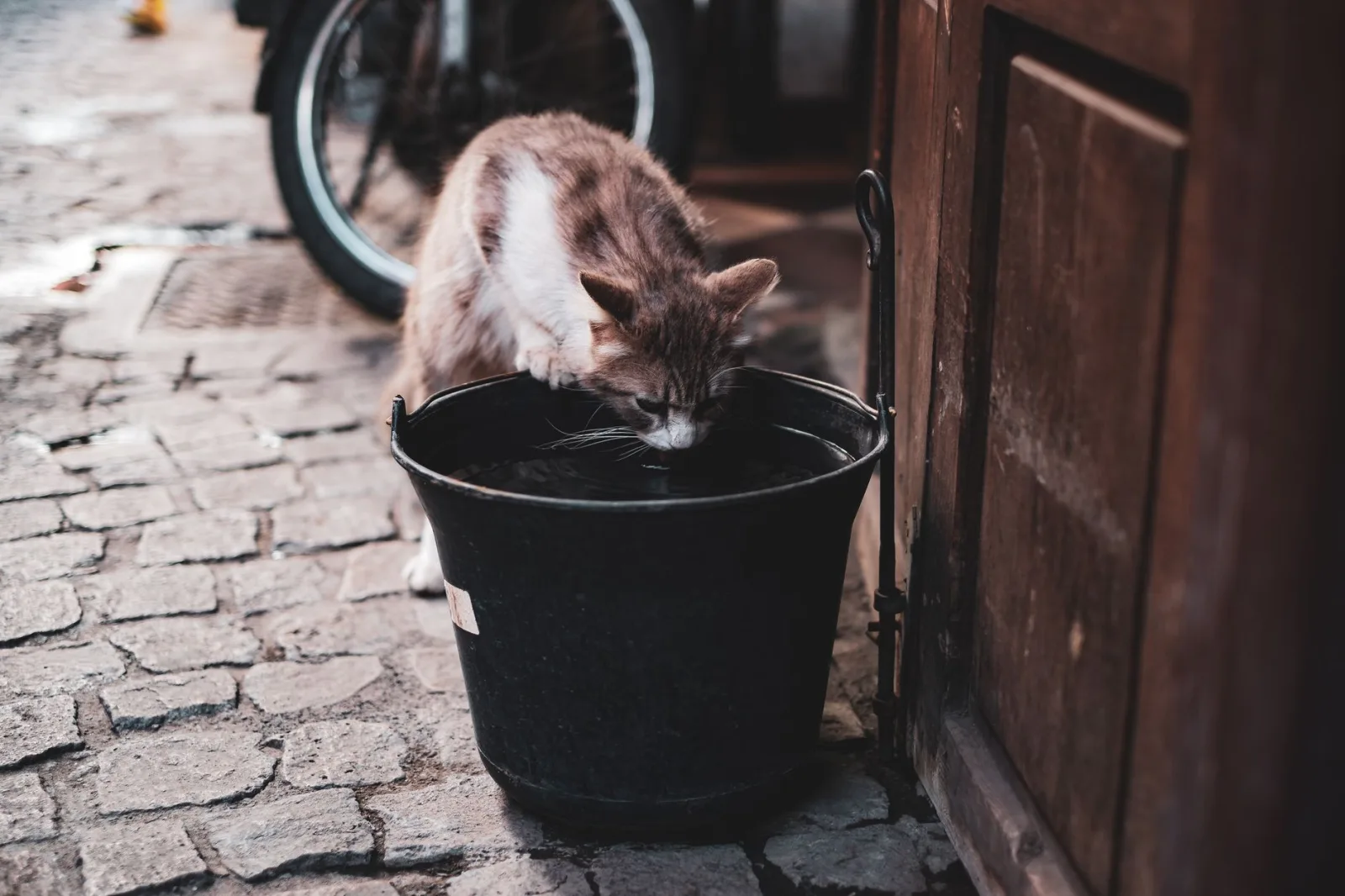
Cats evolved in dry environments and got most of their water from prey, so they have a famously weak thirst drive. On a dry-only diet many cats live in mild chronic dehydration, which over years contributes to kidney and urinary problems — among the most common illnesses in cats.
Why hydration matters
Good water intake supports kidney function and helps prevent urinary tract issues and the painful, sometimes dangerous, blockages that affect male cats in particular. Because cats hide illness, encouraging hydration is an easy, proactive way to protect long-term health.
How to encourage drinking
- Feed wet food: its high moisture content is the single most effective way to boost water intake.
- Offer multiple water sources: place bowls in several rooms, away from the food and litter.
- Try a pet fountain: many cats prefer running water and drink more from one.
- Use wide, shallow bowls so sensitive whiskers do not touch the sides.
Watch for warning signs
A cat drinking noticeably more or less than usual can be signalling a health problem, so note changes. Signs of dehydration include lethargy, sunken eyes and skin that is slow to spring back. If your cat suddenly drinks a lot more, or a male cat strains in the litter box, see your vet promptly.