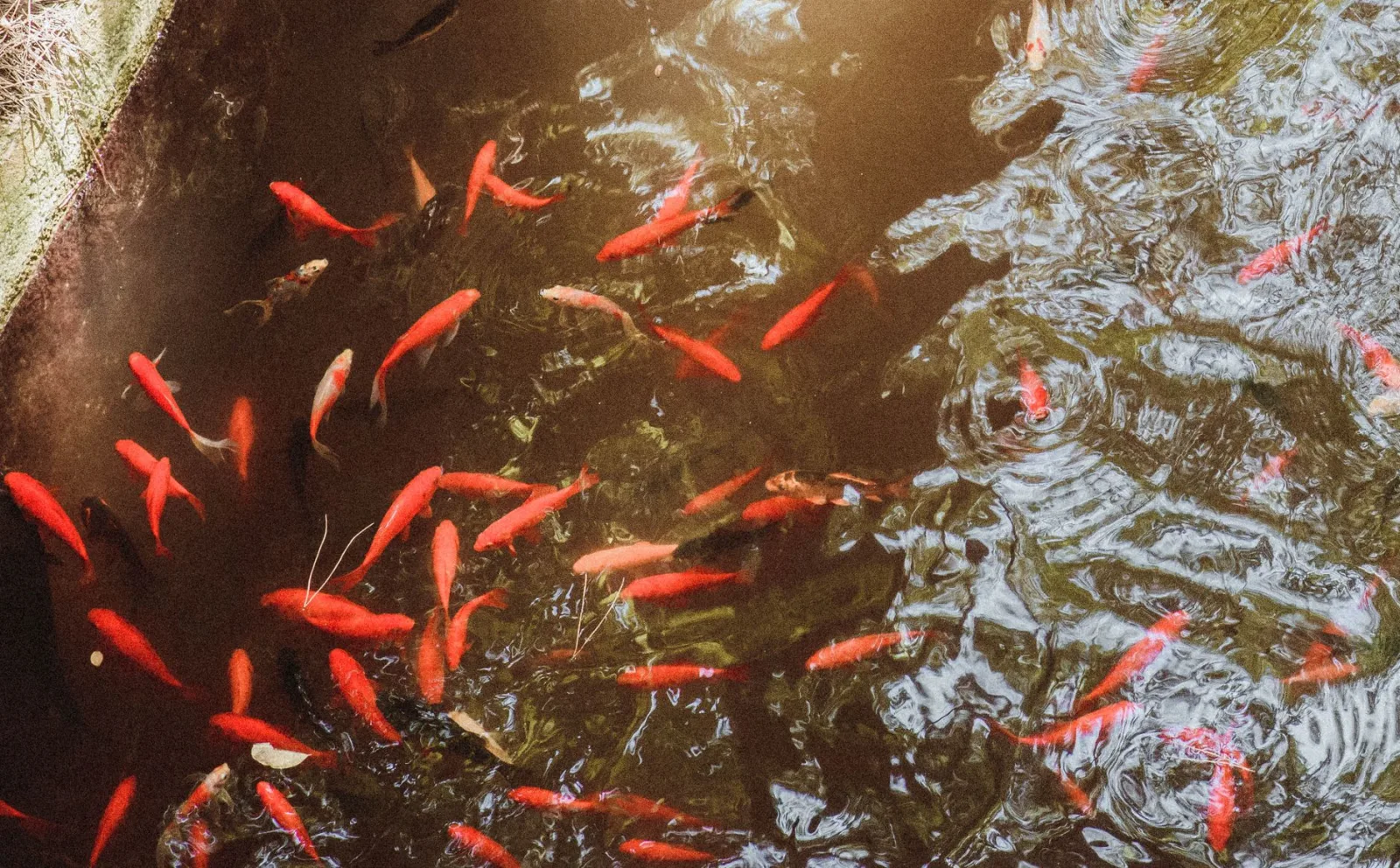
A backyard pond can be a beautiful feature and a wonderful home for fish like koi and goldfish. But ponds are a bigger commitment than they look, and a little planning before you dig saves a great deal of trouble later.
Size and siting
Bigger ponds are far more stable and healthier than small ones, and they cope better with temperature swings. Site the pond in partial shade to limit algae and overheating, away from trees that drop leaves into the water. Make at least part of it deep enough that fish have a cool, stable refuge.
Filtration and oxygen
- A pond filter and pump sized for the volume keep the water clear and safe.
- A waterfall, fountain or air pump adds vital oxygen, especially in warm weather.
- Aquatic plants help oxygenate the water and provide shade and shelter.
Stock sensibly and seasonally
Do not overstock — fish like koi grow large and produce a lot of waste. Cycle the pond before adding fish, just as with an aquarium, and add livestock gradually. Adjust feeding to the season and water temperature, feeding less as it cools, and watch oxygen levels in hot weather. A well-planned pond is low-stress and long-lived.