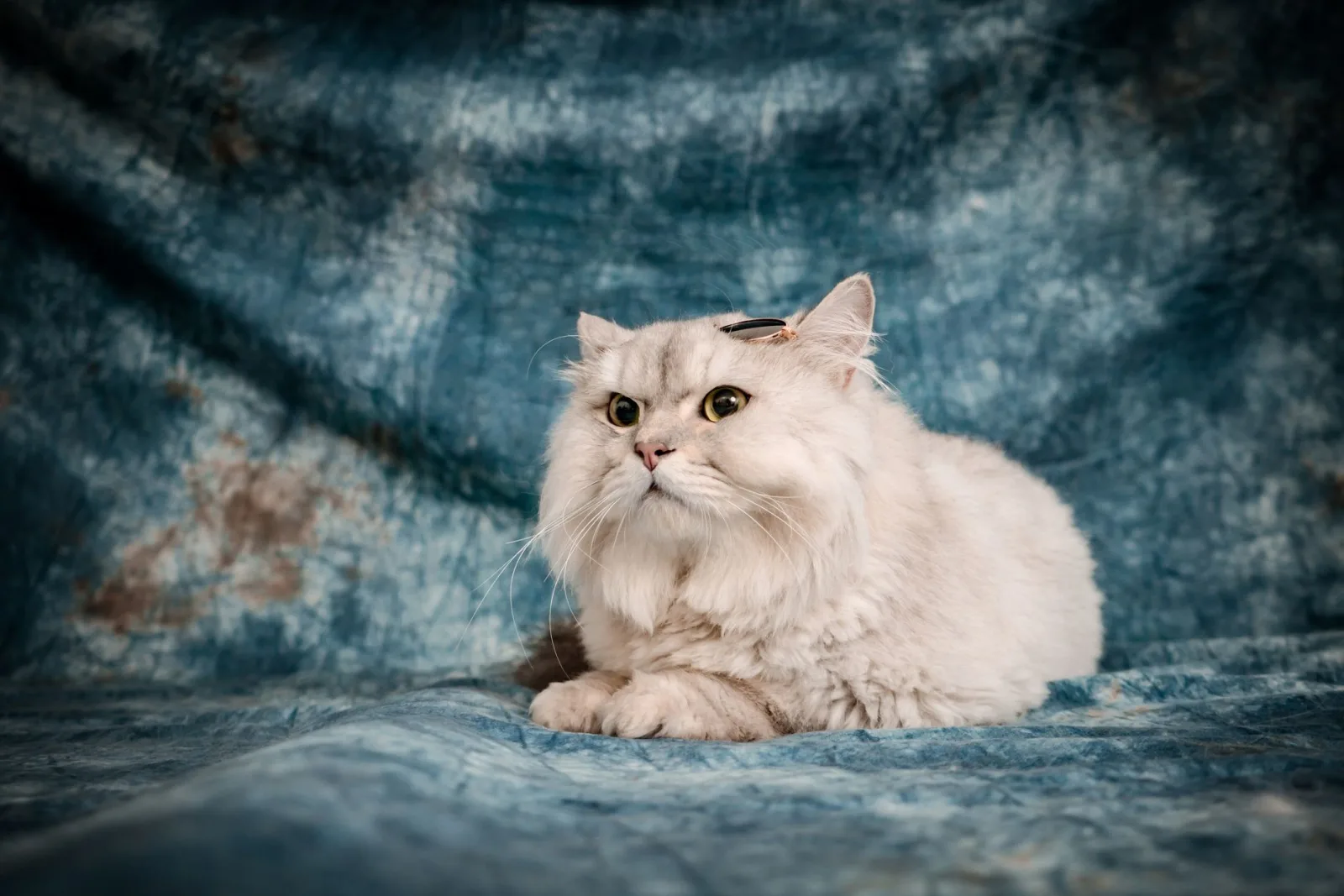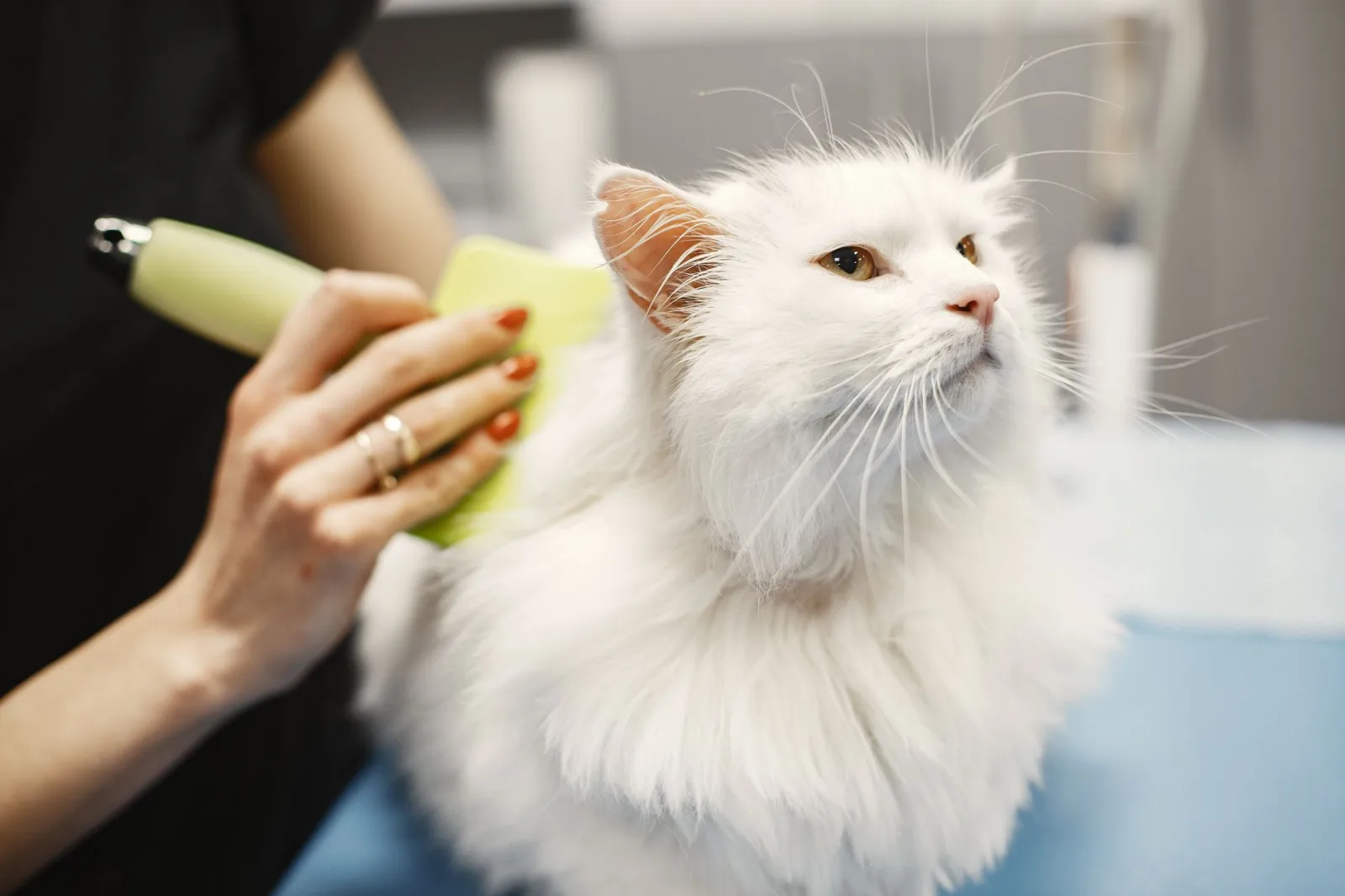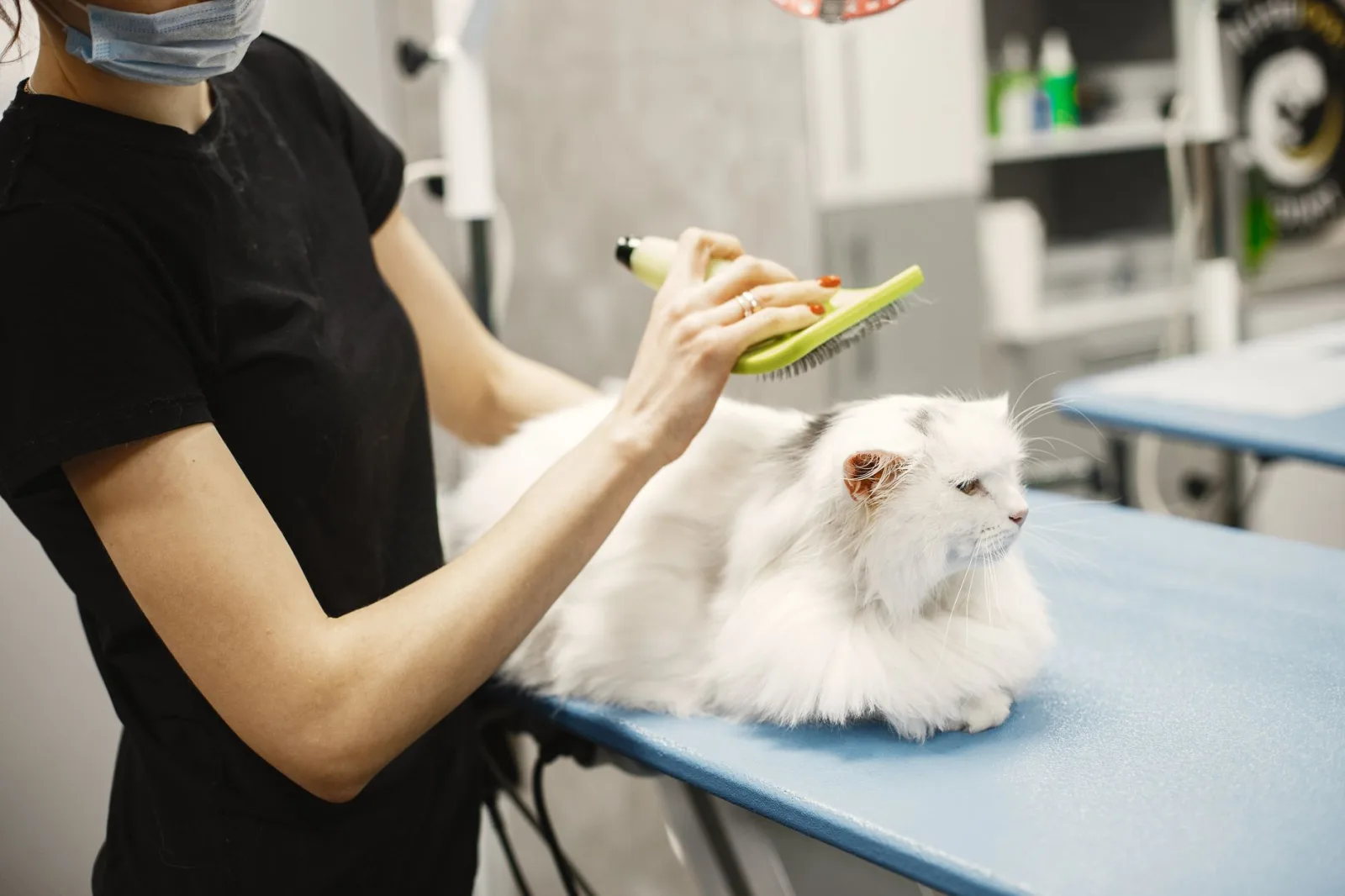
Cats are diligent self-groomers, but regular brushing still helps — it removes loose hair before they swallow it, reduces hairballs and shedding around the home, and gives you a chance to check the skin. It is also a lovely bonding ritual once a cat learns to enjoy it.
Match the tool to the coat
- Short-haired cats: a rubber grooming mitt or soft slicker once or twice a week is plenty.
- Long-haired cats: need brushing most days with a comb and slicker to prevent mats.
- A fine-toothed comb helps find fleas and work through tangles.
Making it enjoyable
Keep sessions short and positive, especially at first. Brush in the direction of the fur, start with the areas your cat likes being touched, and stop before they get irritated. Pair brushing with a calm moment and a treat so your cat comes to welcome it. Never force a struggling cat — quitting before the protest builds tolerance.
Watch for problems
While brushing, feel for mats, lumps, scabs, flea dirt or sore spots. Mats in long-haired cats can pull painfully on the skin and may need careful clipping — never cut them with scissors, as it is easy to nick the skin. Regular brushing keeps small issues from becoming big ones.