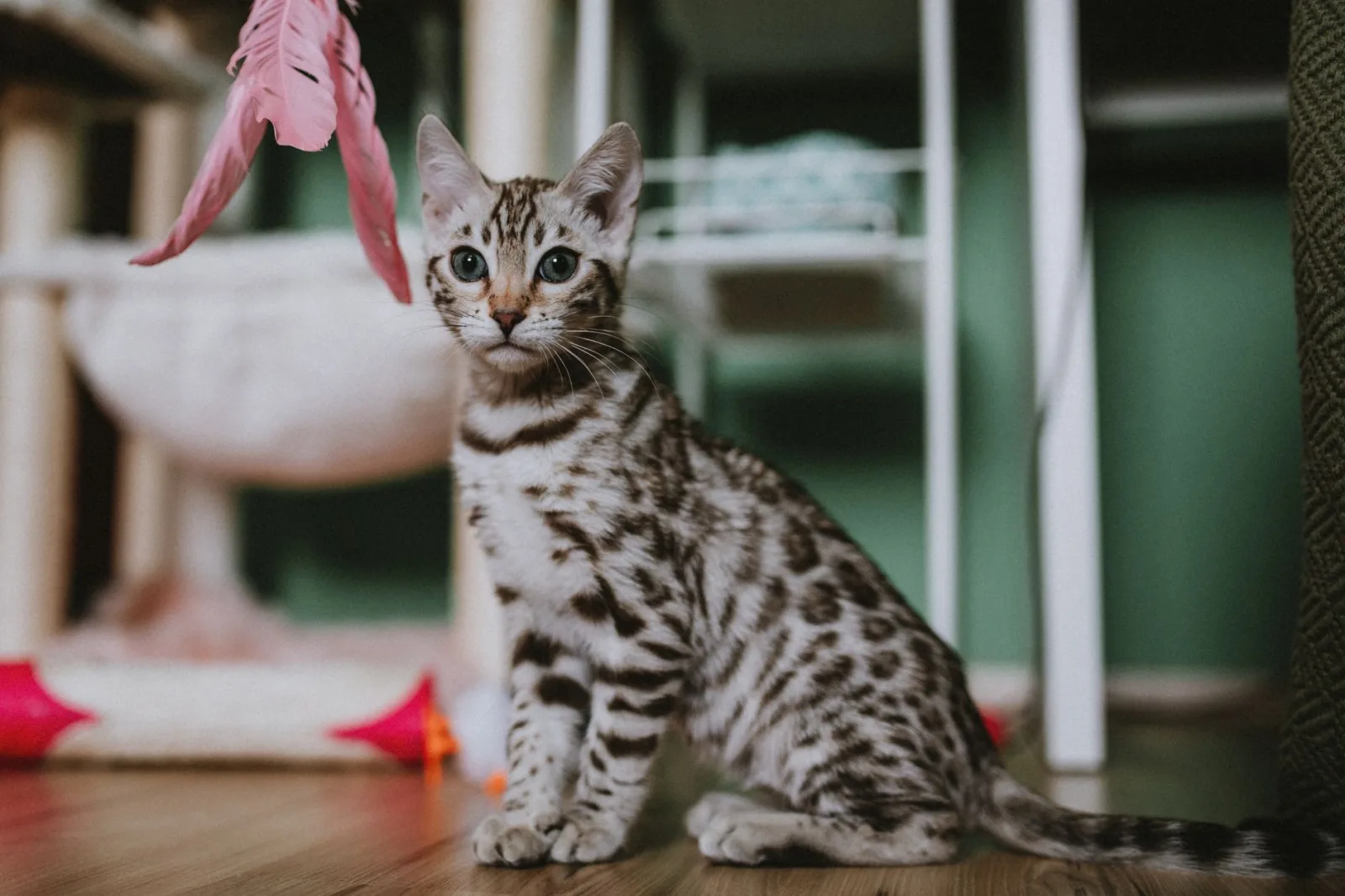
Interestingly, adult cats rarely meow at other cats — vocalising at humans is a behaviour they developed specifically to communicate with us. Learning your cat's vocabulary, alongside their body language, turns a lot of guesswork into genuine understanding.
Common sounds
- Short meow: a greeting or a simple ‘hello’.
- Repeated meows: excitement or insistence — often ‘feed me’.
- Long, drawn-out meow: a demand or complaint.
- Chirps and trills: a friendly, affectionate call, often used by mothers to kittens and by cats inviting you to follow.
- Purring: usually contentment, but cats also purr to self-soothe when unwell or anxious.
- Chattering at birds: hunting excitement and frustration.
When meowing changes
A sudden increase in vocalising can signal hunger, stress, or a medical issue — older cats in particular may yowl from cognitive decline or high blood pressure. A cat that goes unusually quiet may also be unwell.
Read the whole picture
Pair the sound with tail position, ear angle and posture for the full message. A trilling cat with a high tail wants attention; a yowling cat with flattened ears wants space. When vocal habits change markedly, a vet check is worthwhile.