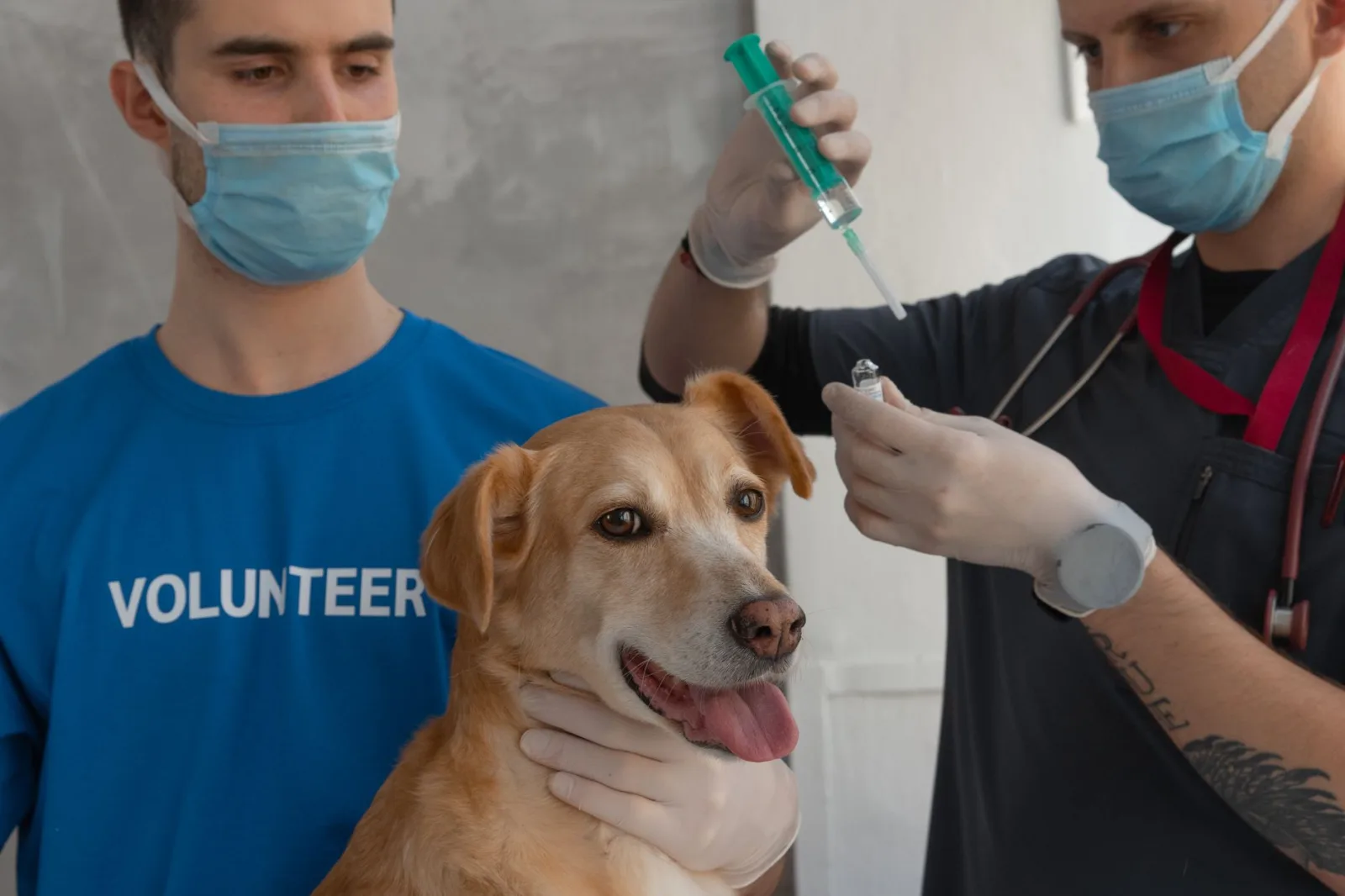
Most owners delay an emergency vet visit because they're not sure it's really an emergency. Here are the eight presentations where the answer is always yes — drive now.
1. A bloated, hard belly
Especially in large, deep-chested dogs. Gastric dilatation-volvulus (GDV) — bloat — kills within hours without surgery. Restlessness, unsuccessful retching, and a drum-tight abdomen are the giveaways.
2. Pale, white, or blue gums
Lift the lip. Healthy gums are pink. White gums mean shock or internal bleeding. Blue gums mean the brain isn't getting oxygen. Either is a same-hour emergency.
3. Difficulty breathing or rapid panting at rest
Watch the rib cage. A resting respiratory rate over 30 breaths per minute in a sleeping dog or cat is abnormal. Open-mouth breathing in a cat is a sign of severe distress.
4. Inability to urinate (especially male cats)
A male cat straining in the litter box and producing nothing is a urethral obstruction — fatal in 48–72 hours. Carry them in immediately. Do not wait until morning.
5. Repeated, projectile, or bloody vomiting
Bringing up food once is usually fine. Vomiting more than three times in a few hours, vomiting blood, or vomiting with severe lethargy means dehydration, obstruction, or poisoning until proven otherwise.
6. Seizures lasting more than two minutes
A single short seizure usually isn't an emergency, but call the vet the same day. Anything over two minutes, or two seizures in 24 hours, is. Don't put your hand near the mouth — just clear the area and time it.
7. Inability to stand, sudden weakness in the back legs
In dachshunds and other long-backed breeds, sudden back-leg weakness is a slipped disc — surgical timing matters. In cats, sudden hind-leg paralysis is often a saddle thrombus, an extremely painful clot.
8. A wound that won't stop bleeding after five minutes of pressure
Apply firm pressure with a clean cloth. If blood is still soaking through after five minutes, drive while keeping the pressure on. Spurting bright red blood is an arterial bleed — leave the dressing on and don't lift it to look.